In 2026, the American psyche is facing unprecedented challenges. Between the “always-on” nature of remote work and the relentless stream of digital information, mental health awareness has moved from the fringes of society to the very center of our daily lives. We are realizing that emotional well-being isn’t a luxury—it is the foundation upon which our physical health and professional success are built.
Many Americans are searching for anxiety relief and stress management techniques that go beyond the cliché. This guide offers a deep dive into the science of the nervous system and provides actionable strategies to help you find balance in an increasingly chaotic world.
1. The Science of the Stress Response
To manage stress, we must first understand it. In 2026, we categorize stress into “Acute” (short-term) and “Chronic” (long-term). While acute stress can actually improve performance, chronic stress is a silent killer that erodes the immune system and leads to burnout.
The HPA Axis and Cortisol
When you perceive a threat—whether it’s a car swerving into your lane or a critical email from your boss—your Hypothalamic-Pituitary-Adrenal (HPA) axis kicks into gear. This floods your body with cortisol.
- The Problem: In modern life, we never “shut off” the alarm. This constant cortisol soak leads to “brain fog,” weight gain around the midsection, and a shortened fuse with loved ones.
- The Solution: We must implement “circuit breakers” throughout the day to tell our nervous system that the threat has passed.
2. Somatic Strategies: Healing from the Bottom Up
For a long time, we tried to solve stress by relying on our thoughts alone. In 2026, the focus has shifted to Somatic (body-based) strategies. Because stress is a physical event, it often requires a physical solution.
Vagus Nerve Stimulation
As the longest nerve in the body, the vagus nerve helps slow and balance your nervous system. You can stimulate it through:
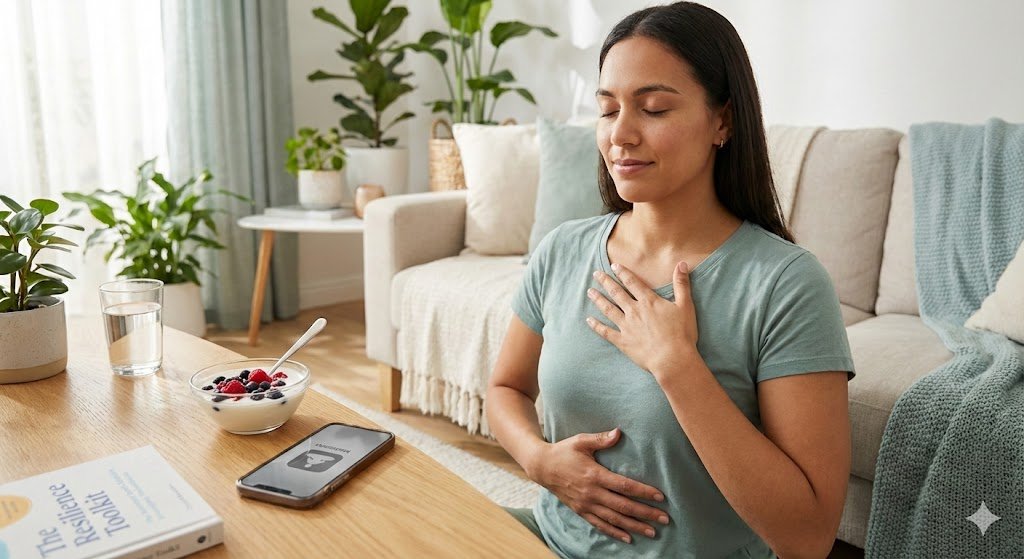
- The Physiological Sigh: Take a deep breath in through the nose, followed by a second short “sip” of air at the very top, then exhale slowly through the mouth. Doing this 3 times can instantly lower your heart rate.
- Cold Exposure: Splashing ice-cold water on your face for 30 seconds triggers the “mammalian dive reflex,” which forces your heart rate to slow down and shifts you into a calmer state.
- Humming or Chanting: The Vagus nerve passes through the vocal cords; the vibration of humming helps “tone” the nerve, making you more resilient to future stress.
3. Digital Wellness and the Attention Economy
One of the primary causes of anxiety in the U.S. today is the “Attention Economy.” Our devices are designed to keep us in a state of hyper-vigilance.
Creating a Digital Sanctuary
To protect your emotional well-being, you must treat your attention as your most valuable resource:
- The “Gray-Scale” Hack: Turn your phone screen to gray-scale mode. By removing the vibrant colors, you make the device significantly less “rewarding” to your brain’s dopamine system.
- Notification Fasting: Only allow notifications from real humans (calls/texts). Everything else—social media, news alerts, shopping apps—is a “micro-stressor” you don’t need.
- Monotasking: The myth of multitasking is dead. Focus on one task at a time to reduce the “switching cost” that fatigues the brain and increases anxiety.
4. The New Work-Life Harmony
The old concept of “Work-Life Balance” implied a perfect split that rarely exists. In 2026, we speak of work-life harmony. This recognizes that some weeks will be work-heavy, and others will be life-heavy.
Setting Boundaries in a Remote World
- Physical Transition Rituals: If you work from home, your brain needs a signal that the day is over. Change your clothes, take a 5-minute walk, or close your laptop and put it in a drawer. This “commute” signals the brain to stop producing work-related cortisol.
- The Power of “No”: Setting boundaries is a form of mental health awareness. Saying no to a social event or an extra project isn’t selfish; it’s a necessary act of self-preservation.
5. Nutrition for the Mind: The Gut-Brain Axis
We cannot discuss stress management without mentioning the gut. About 95% of your serotonin—the “feel-good” neurotransmitter—is produced in your gastrointestinal tract.
- Psychobiotics: This is a new class of probiotics in 2026 specifically studied for their ability to lower anxiety. Incorporating fermented foods like kefir, sauerkraut, and kimchi can actually improve your mood.
- Magnesium: Known for its calming effects, it is commonly deficient in many Americans. This mineral is essential for muscle relaxation and regulating the stress response.
FAQ: Navigating Mental Health Challenges
Q: How do I tell the difference between “normal stress” and an anxiety disorder? > A: Normal stress is usually tied to a specific event. Anxiety is often a persistent, “free-floating” sense of dread that occurs even when things are going well. If your worry is preventing you from sleeping or eating, seeking a professional mental health counselor is a brave and necessary step.
Q: Does exercise really help with anxiety? > A: Yes. Exercise metabolizes the excess adrenaline and cortisol in your system. A 20-minute walk can be as effective as some mild anti-anxiety medications for temporary relief.
Q: What is the fastest way to stop a panic attack? > A: Use the “5-4-3-2-1” grounding technique. Name five things you can see, four you can feel, three you can hear, two you can smell, and one you can taste. This pulls your brain out of the “future-threat” loop and back into the present moment.
Conclusion: You Are Not Alone
The journey toward better mental health is not a straight line. There will be days of high stress and days of profound peace. In 2026, the most important thing you can do is treat yourself with the same compassion you would offer a friend.
By utilizing somatic tools, setting digital boundaries, and prioritizing your gut health, you are building a “resilience toolkit” that will serve you for a lifetime. True strength isn’t about never feeling stressed—it’s about knowing how to find your way back to calm.