(Ultimate Cultural Experience)
Introduction: Why Egypt Is More Than a Destination
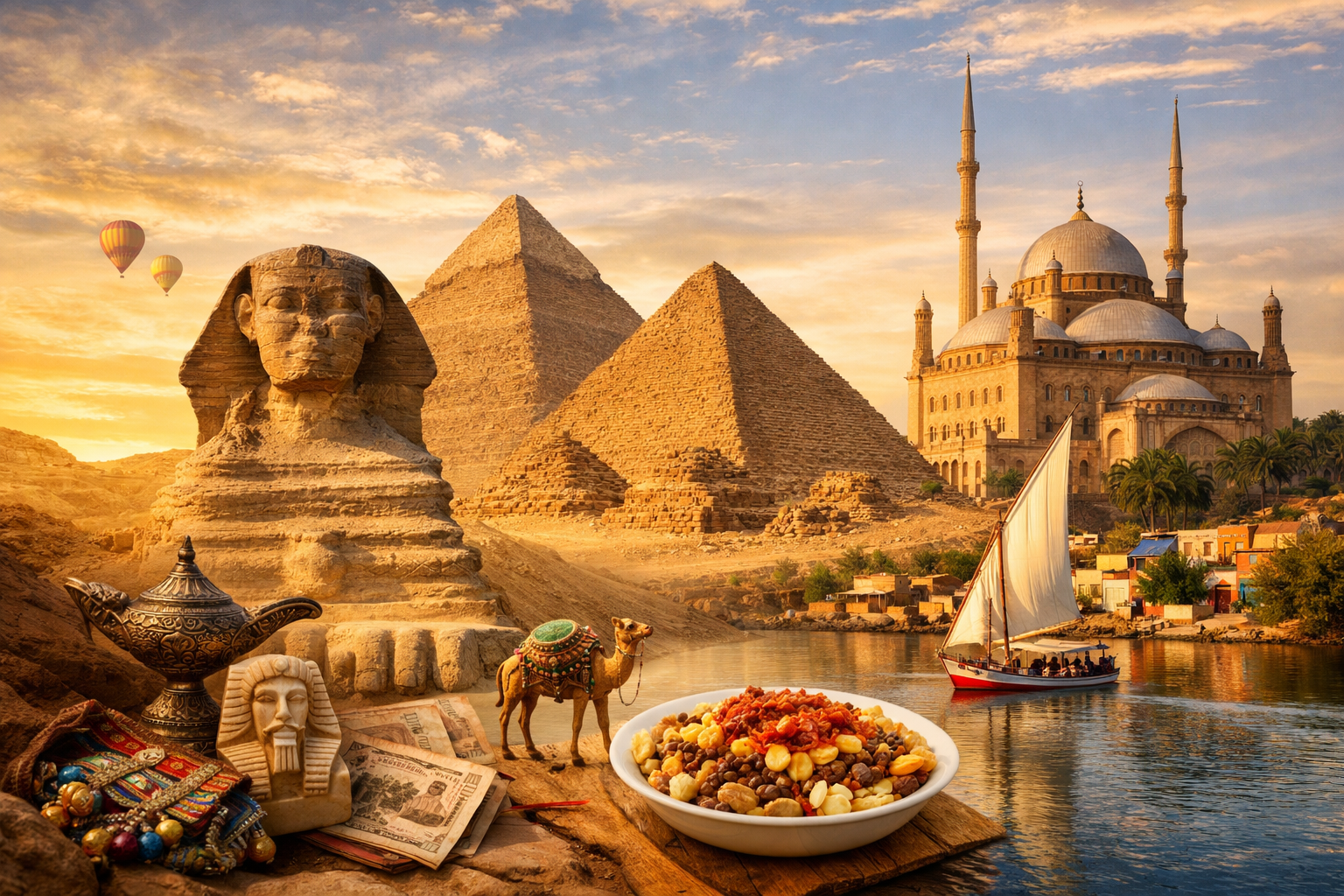
Welcome to Egypt — a country that doesn’t just welcome visitors, it embraces them. From the timeless flow of the Nile to the vibrant noise of Cairo’s streets, Egypt offers something rare: a living civilization where ancient wonders and modern daily life coexist side by side.
For American travelers and global explorers, Egypt is not only about pyramids and temples. It’s about sipping tea in local cafés, hearing the call to prayer echo across historic neighborhoods, tasting legendary street food, and walking through cities that carry names older than most civilizations.
In this complete Egypt travel guide, you will discover the secrets of Pharaonic civilization, the truth behind famous myths, Egyptian culture, food, traditions, festivals, and why millions of visitors fall in love with Egypt every year.
What Does “Egypt” Mean? The Hidden Story Behind the Name
The name Egypt itself tells a powerful story.
Ancient Egyptians called their land “Kemet,” meaning “The Black Land,” referring to the fertile soil created by the Nile’s annual floods. Another ancient name was “Hut-Ka-Ptah,” meaning “House of the Spirit of the God Ptah,” a sacred center in ancient Memphis.
When Greeks arrived, they transformed the pronunciation into “Aigyptos,” which eventually became “Egypt” in English. Interestingly, the word “Copt” originally meant Egyptian — not religious — showing how deeply language preserves identity.
Pharaonic Civilization: Why Ancient Egypt Still Amazes the World
Ancient Egypt was not built on mystery alone — it was built on science, engineering, medicine, architecture, and advanced administration.
Egyptians mastered irrigation systems, medical treatments, astronomical calendars, and monumental construction thousands of years before modern technology.
The Three Pillars of Egyptian Greatness
- The Nile River – The lifeline of agriculture, transportation, and trade
- Strong Governance – Organized administration and long-term planning
- Belief in the Afterlife – A spiritual motivation behind temples, pyramids, and tombs
This combination created one of the longest-lasting civilizations in human history.
Hollywood vs Reality: Are Pharaohs Misunderstood?
Movies often portray pharaohs as tyrants surrounded by curses and magic. In reality, ancient Egyptians valued balance, beauty, justice, and order.
Their religion focused on harmony between humans and nature—not fear. Their art emphasized proportion and symbolism, and their daily life revolved around community, farming, and craftsmanship.
The Pharaohs’ Curse: The Real Story Behind the Myth
No tale from Egypt is more well-known than the myth of the Pharaoh’s Curse, particularly linked to King Tutankhamun.
Tutankhamun became king at only nine years old and ruled for about ten years. The discovery of his tomb in 1922 stunned the world. Over 5,000 artifacts were found, including the iconic golden mask made from more than 11 kilograms of pure gold.
One of the most fascinating objects was his dagger, crafted from meteoric iron — metal that came from space.
Several deaths among the excavation team created the curse myth. Today, scientists believe these deaths were caused by bacteria and toxic spores trapped inside sealed tombs — not supernatural forces.
Ancient Egyptian Festivals: The Origins of Modern Celebrations
Few people know that evergreen trees — similar to modern Christmas trees — were symbols of eternal life in ancient Egypt.
The Egyptian New Year was linked to the flooding of the Nile, marking the start of the farming season and prosperity. Families exchanged flatbread, ducks, and geese while greeting each other with “Heb Neferet,” meaning “Happy New Year.”
This tradition reflects Egypt’s ancient connection between nature and celebration.
Egyptian Cities: Where Ancient Names Still Live
Many modern Egyptian cities preserve ancient meanings:
- Aswan – Originally “Suno,” meaning marketplace
- Assiut – Meaning “The Protected City”
- Fayoum – From “Pa-Yom,” meaning the great lake
- Damietta – Meaning northern land
- Damanhur – City of the god Horus
- Minya – Connected to the royal household of King Khufu
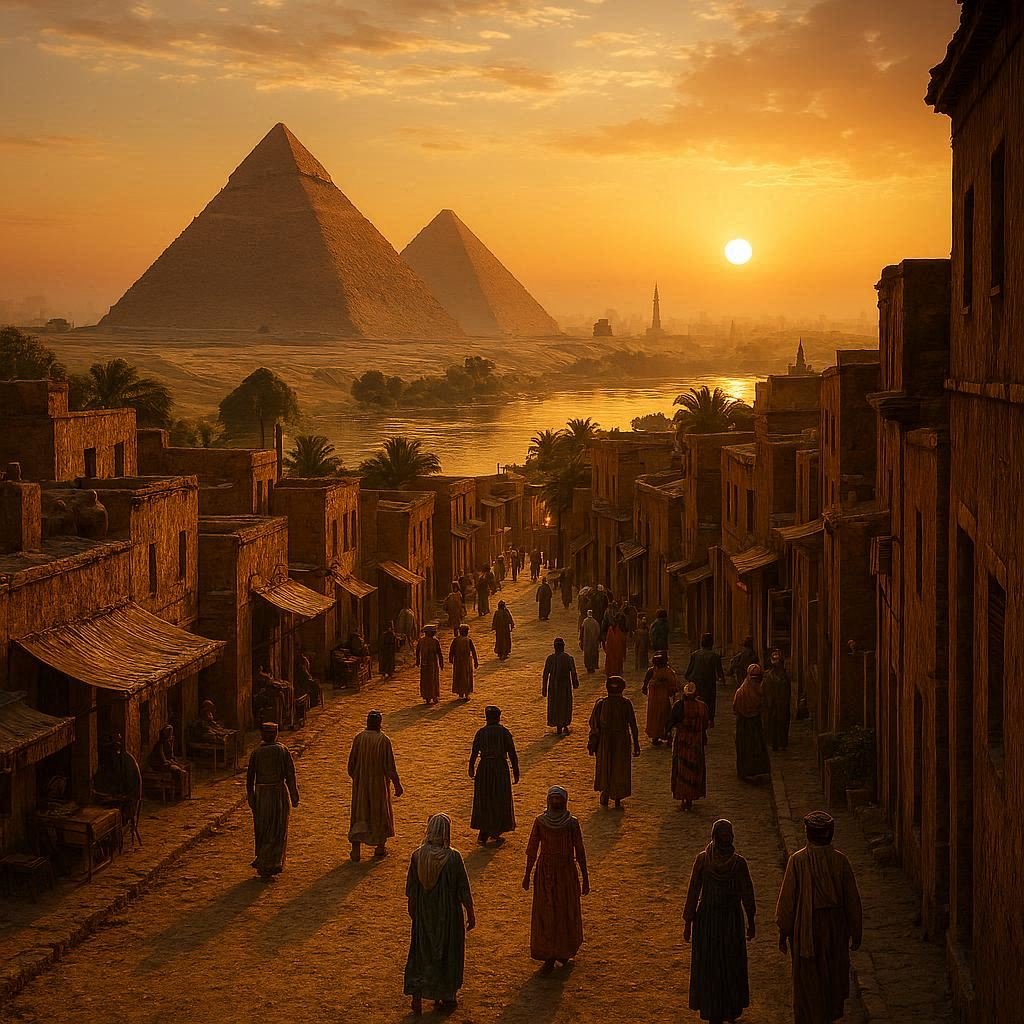
Walking through Egypt is like walking through an open-air history museum.
Egyptian Street Food: From Ancient Recipes to Modern Classics
Koshari: Egypt’s National Dish
Koshari is Egypt’s most famous street food. Its roots trace back to ancient grain-based meals. Today’s version combines rice, pasta, lentils, chickpeas, tomato sauce, garlic, vinegar, and crispy onions.
It’s affordable, filling, and loved by everyone — students, workers, tourists, and families.
Traditional Egyptian Breakfast
A real Egyptian morning starts with:
- Ful Medames (slow-cooked fava beans)
- Taameya (Egyptian falafel made from fava beans)
Popular ful variations include lemon ful, tomato ful, Alexandrian spicy ful, ful with tahini, and ful with eggs.
Famous Egyptian Dishes You Must Try
If you visit Egypt, don’t miss:
- Molokhia (royal green soup)
- Stuffed grape leaves and cabbage
- Fattah with garlic and vinegar
- Stuffed pigeons
- Hawawshi (spiced meat bread)
- Alexandrian liver sandwiches
- Feseekh and Renga during Sham El-Nessim
Each dish reflects generations of tradition.
Ramadan in Egypt: A Cultural Experience Unlike Any Other
Ramadan transforms Egypt into a festival of lights and unity.
Colorful lanterns decorate streets, charity food tables appear everywhere, families gather nightly, and dessert shops overflow with kunafa and qatayef.
Muslims and Christians share the atmosphere, exchange greetings, and celebrate together — a true example of social harmony.
Marriage and Family Life in Ancient Egypt
Ancient Egypt granted women rights far ahead of their time. Women could own property, initiate divorce, work, and manage businesses.
Marriage contracts were written agreements focused on mutual respect and family stability — values that continue in Egyptian society today.
Why Tourists Fall in Love With Egyptians
Egypt’s greatest attraction isn’t just monuments — it’s people.
Egyptians are known for hospitality, humor, generosity, and warmth. Visitors are often invited to homes, offered tea by strangers, and treated like family.
Many travelers leave Egypt emotional — not because the vacation ended, but because they’re leaving behind real human connections.
Final Thoughts: Egypt Is Not a Trip — It’s a Memory for Life
Egypt is not simply a travel destination. It’s a story you walk through, taste, hear, and feel.
From pyramids to street cafés, from temples to local markets, from ancient hieroglyphs to children playing football in narrow alleys — Egypt leaves a permanent mark on every visitor.
Welcome to Egypt — where history begins and the story never ends.